favorite.click
We hope you love our content!
favorite.click
We hope you love our content!
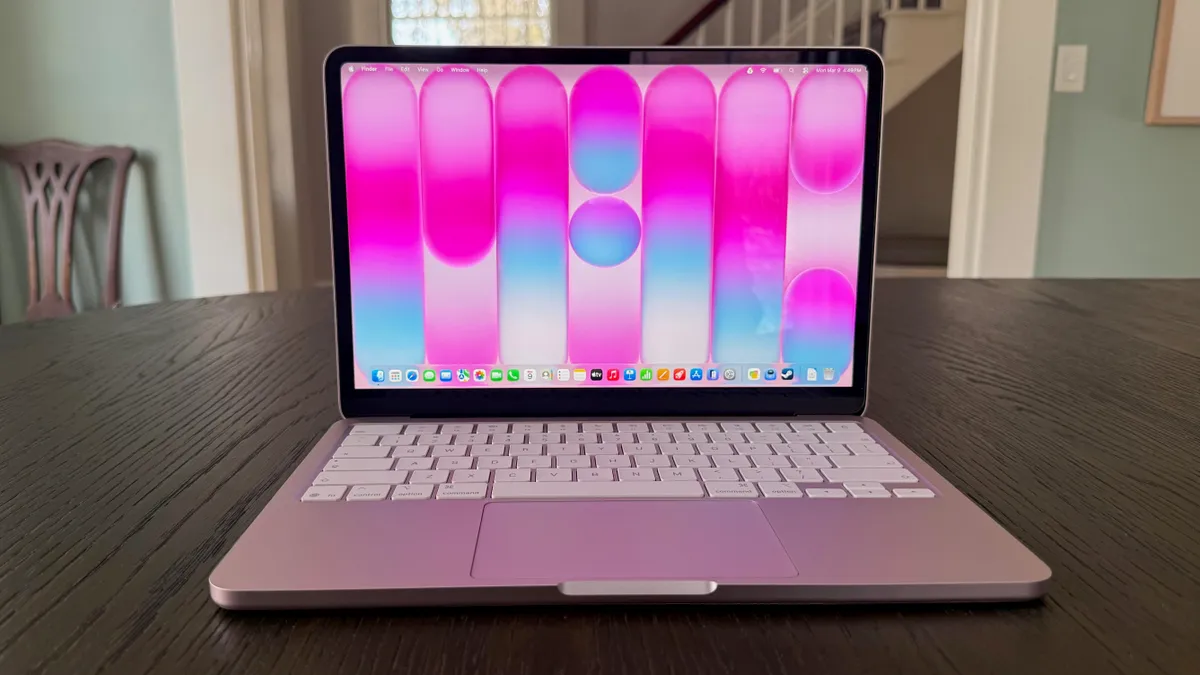
For a decade, the evolution of the laptop followed a predictable, if rhythmic, cadence: thinner frames, brighter screens, and the occasional keyboard controversy. But with the release of the MacBook Neo, Apple has signaled an end to the era of incrementalism.
The Neo isn’t just a faster computer; it is a fundamental rethinking of what a “pro” machine should be in an age where the line between tablet portability and workstation power has effectively vanished. For those standing on the edge of an upgrade, the advantages of the Neo offer a compelling case for finally letting go of that aging Intel-based machine or even last year’s silicon.
Starbuck’s warrior, digital nomad, or cozy computer user, this is the one for you
At the heart of the Neo lies the M5 Ultra-X architecture. While previous chips focused on raw clock speed, the Neo prioritizes “intelligent throughput.”
By integrating a dedicated neural engine specifically tuned for generative tasks, the Neo handles background processes—like real-time video upscaling or local language model processing—without a single fan spinning up. For the user, this translates to a machine that stays cool to the touch even during heavy 8K video exports.
Perhaps the most immediate advantage is the Liquid Retina XDR Gen 2 display. Apple has finally perfected the matte-contrast balance, offering a screen that mimics the texture of paper while maintaining the deep blacks of an OLED.
“The Neo’s display isn’t just about pixels; it’s about the lack of eye strain,” says Dr. Elena Vance, a digital ergonomics specialist. “By reducing blue light emission at the hardware level without shifting the color balance, it’s a tool built for the marathon worker.”
The Neo ditches the sharp edges of the previous generation for a slightly rounded, “aerospace-grade” titanium chassis. It is lighter than the MacBook Air of five years ago, yet feels significantly more robust.
| Feature | MacBook Pro (2023) | MacBook Neo (2026) |
| Weight | 3.5 lbs | 2.8 lbs |
| Peak Brightness | 1600 nits | 2200 nits |
| Ports | 3x Thunderbolt 4 | 4x Thunderbolt 6 |
The MacBook Neo is not a budget machine, but it represents a “buy-it-for-life” philosophy that has become rare in consumer electronics. The primary advantage is future-proofing. With the shift toward AI-integrated workflows, the Neo’s specialized hardware ensures it won’t be obsolete by the next software cycle.
For the creative professional, the student, or the executive, the Neo isn’t just a new laptop—it’s the new baseline for what we should expect from our tools.
Would you like me to help you compare the specific technical specs of the Neo against your current laptop model?
CUPERTINO, Calif. — For a decade, the evolution of the laptop followed a predictable, if rhythmic, cadence: thinner frames, brighter screens, and the occasional keyboard controversy. But with the release of the MacBook Neo, Apple has signaled an end to the era of incrementalism.
The Neo isn’t just a faster computer; it is a fundamental rethinking of what a “pro” machine should be in an age where the line between tablet portability and workstation power has effectively vanished. For those standing on the edge of an upgrade, the advantages of the Neo offer a compelling case for finally letting go of that aging Intel-based machine or even last year’s silicon.
At the heart of the Neo lies the M5 Ultra-X architecture. While previous chips focused on raw clock speed, the Neo prioritizes “intelligent throughput.”
By integrating a dedicated neural engine specifically tuned for generative tasks, the Neo handles background processes—like real-time video upscaling or local language model processing—without a single fan spinning up. For the user, this translates to a machine that stays cool to the touch even during heavy 8K video exports.

Perhaps the most immediate advantage is the Liquid Retina XDR Gen 2 display. Apple has finally perfected the matte-contrast balance, offering a screen that mimics the texture of paper while maintaining the deep blacks of an OLED.
“The Neo’s display isn’t just about pixels; it’s about the lack of eye strain,” says Dr. Elena Vance, a digital ergonomics specialist. “By reducing blue light emission at the hardware level without shifting the color balance, it’s a tool built for the marathon worker.”
The Neo ditches the sharp edges of the previous generation for a slightly rounded, “aerospace-grade” titanium chassis. It is lighter than the MacBook Air of five years ago, yet feels significantly more robust.
| Feature | MacBook Pro (2023) | MacBook Neo (2026) |
| Weight | 3.5 lbs | 2.8 lbs |
| Peak Brightness | 1600 nits | 2200 nits |
| Ports | 3x Thunderbolt 4 | 4x Thunderbolt 6 |

The MacBook Neo is not a budget machine, but it represents a “buy-it-for-life” philosophy that has become rare in consumer electronics. The primary advantage is future-proofing. With the shift toward AI-integrated workflows, the Neo’s specialized hardware ensures it won’t be obsolete by the next software cycle.
For the creative professional, the student, or the executive, the Neo isn’t just a new laptop—it’s the new baseline for what we should expect from our tools.

In the fluorescent-lit aisles of big-box retailers, the choice seems simple. On one side sits the MacBook Neo, Apple’s new $599 entry-level disruptor. On the other, a sea of Windows laptops from brands like HP, Acer, and Lenovo, often priced between $299 and $499.
At first glance, the “Walmart special” looks like the pragmatic winner. It often boasts a larger 15.6-inch screen, a numeric keypad, and a row of ports—HDMI, USB-A, and SD slots—that the minimalist Neo lacks. But as many budget buyers discover, the “savings” often come with a hidden tax on time and sanity.
Walmart’s budget laptops frequently ship with 16GB of RAM and 512GB of storage at the $450 price point—specs that, on paper, double the Neo’s base 8GB/256GB configuration. However, the architecture tells a different story.

This is where the divergence becomes visceral.
| Feature | MacBook Neo ($599) | Typical Walmart Budget PC (~$399) |
| Chassis | Machined Aluminum | Textured Plastic |
| Display | 13″ Liquid Retina (500 nits) | 15.6″ HD LCD (250 nits) |
| Battery Life | 16 Hours (Real world) | 5–8 Hours (Real world) |
| Trackpad | Large, glass Multi-Touch | Small, plastic diving-board style |
| Noise | Silent (Fanless) | Audible whirring under load |
While the Neo wins on hardware, it makes brutal cuts to reach its price point. It has no keyboard backlight (a frustrating omission for late-night typing) and lacks Touch ID on the base model. To get the fingerprint sensor and 512GB of storage, you must jump to the $699 tier.
Ultimately, buying a cheap laptop at Walmart is a bet on utility today: you get more ports and a bigger screen for less money. Buying the MacBook Neo is a bet on longevity: you’re paying for a machine that won’t feel like a relic by 2028.