favorite.click
We hope you love our content!
favorite.click
We hope you love our content!
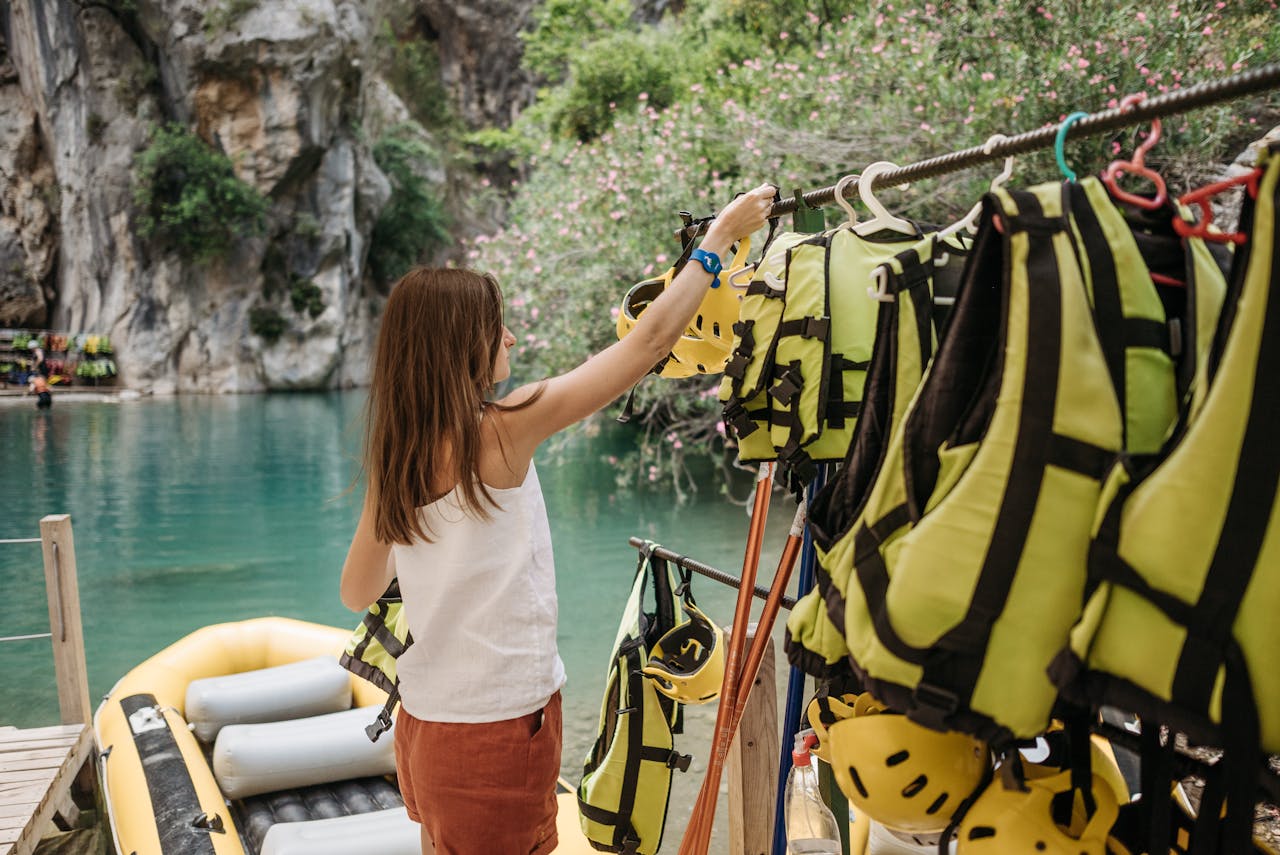
For years, the “luxury escape” was synonymous with static indulgence: a villa in the Hamptons, a plunge pool in Scottsdale, or a silent stretch of sand in Maui. But as we enter the summer of 2026, a new set of travelers is seeking a different kind of immersion—one that moves at eight miles per hour and comes with the unpredictable roar of Class IV rapids.
River rafting, once the domain of sun-baked adrenaline junkies and summer campers, has undergone a sophisticated transformation within the American West. It has emerged as the premier “unplugged” vacation for a digitally fatigued workforce, offering something a coastal resort cannot: a forced surrender to the current.
The 2026 season is defined by the rise of the High-Design Expedition. On the rivers of Idaho and the deep chasms of Arizona, outfitters have replaced the soggy sandwiches of yesteryear with “Floating Safaris.” These trips pair the raw intensity of the water with unexpected shoreline luxuries.
Think canvas-tented camps pitched on pristine sandbars, featuring Persian rugs, battery-powered espresso machines, and three-course dinners paired with chilled natural wines from the Willamette Valley. “People want the grit of the canyon during the day and the grace of a boutique hotel at night,” says Sarah Voss, founder of Currents & Co., a luxury outfitter. “They want to feel the splash of the river, but they want to sleep on 400-thread-count cotton.”


| River | Location | The Draw | Best For |
| The Colorado | Arizona | The iconic 277-mile journey through the Grand Canyon. | The Bucket-List Purist |
| The Middle Fork | Idaho | 100 miles of alpine scenery and natural hot springs. | Multi-Generational Families |
| The Rogue | Oregon | Lush forests and sightings of bald eagles and black bears. | Wildlife Enthusiasts |
| The Gauley | West Virginia | Intense, technical drops through the Appalachian wild. | The Adrenaline Elite |
Perhaps the greatest luxury of the river in 2026 is the Geographic Blackout. As satellite internet becomes increasingly ubiquitous across the continental United States, the deep granite walls of American river canyons remain some of the last reliable “dead zones.”
For the executive who cannot help but check a notification, the canyon wall is the ultimate boundary. On a six-day float, the “phantom vibration” of a smartphone is replaced by the rhythmic dip of an oar. It is a psychological recalibration that a weekend at a domestic spa simply cannot replicate.
“On the river, your schedule is dictated by the sun and the flow rate, not the calendar,” notes Dr. Julian Aris, a behavioral psychologist. “It’s a return to ‘Linear Time,’ which is increasingly rare in our ‘Parallel Time’ digital lives.”
The 2026 traveler is also more attuned to the fragility of these domestic ecosystems. The industry has shifted toward a Zero-Trace Luxury model. New regulations on the Colorado River now require even the most high-end outfitters to utilize solar-powered kitchens and hydrogen-cell transport for gear.
The “luxury” here is the preservation of the silence. In 2026, the quietest boat is the most expensive one. Electric-assist oars—used sparingly to navigate flat water—are replacing small outboard motors, ensuring that the only soundscape is the water hitting the hull of the raft.
Even fashion has followed the current. The “River Core” aesthetic has moved from the canyon to the city, with high-end designers releasing “technical-chic” lines: waterproof silks, recycled nylon utility vests, and sandals that transition from a raft to a midtown bistro. But on the water, the uniform remains functional: a wide-brimmed hat, a layer of zinc, and the unmistakable glow of someone who hasn’t looked at a screen in 72 hours.
As the 2026 season kicks off, the message is clear: If you want to find yourself this summer, you first have to let the American wild take you somewhere else.
THE GEAR
As the “Geographic Blackout” becomes the primary draw for the 2026 river traveler, the packing list has shifted from digital gadgets to high-performance analog tools. When the nearest cell tower is three canyon walls away and the power grid is a distant memory, self-sufficiency becomes the ultimate luxury.
To navigate the wilderness of the Middle Fork or the Colorado without the crutch of a lithium-ion battery, the discerning rafter is turning to a kit that prioritizes durability, mechanical precision, and tactile pleasure.
| Item | The Analog Choice | Why It Matters |
| Timekeeping | Automatic Field Watch | No charging required; powered by the motion of your rowing. |
| Navigation | Topographic Tyvek Maps | Unlike GPS, paper doesn’t run out of juice or lose signal in deep gorges. |
| Illumination | Solar-Charged Ambient Lanterns | Collapsible LED cubes that soak up the desert sun by day. |
| Memory | Waterproof Journals & Film | A Moleskine and a Leica M-A—for thoughts and shots that aren’t for the “cloud.” |
| Purification | Gravity-Fed Ceramic Filters | Uses physics, not electricity, to turn river water into drinking water. |
The most notable shift in 2026 is the rejection of “smart” tech in favor of mechanical reliability. On the river, a dead battery is a paperweight. Consequently, the Manual Espresso Press has replaced the pod machine in the premium raft kit. Using only hot water and hand-cranked pressure, these devices deliver a crema that rivals any Manhattan cafe, powered entirely by bicep.
Similarly, entertainment has reverted to the physical. Outfitters are seeing a surge in requests for “River Libraries”—waterproof cases packed with hardcover classics and linen-bound decks of cards. There is a specific prestige in 2026 to being seen with a book that has been physically weathered by the spray of a rapid.

Without the hum of a generator, the river at night is profoundly dark. The modern traveler eschews the jarring blue light of a smartphone flashlight for Warm-Spectrum Solar Lanterns. These devices are clipped to the exterior of the raft during the day, absorbing the high-altitude UV rays of the American West. By nightfall, they emit a soft, amber glow that preserves night vision and honors the “Dark Sky” initiatives now strictly enforced in National Park canyons.
“There is a profound psychological shift that happens when you realize you can’t just ‘plug in’ to solve a problem,” says Voss. “You start to trust your gear, the sun, and your own hands. That’s when the vacation actually begins.”

While “unplugging” is the goal, safety remains the exception. For the 2026 season, the only piece of tech allowed in the “silent” kit is the Satellite SOS Messenger. These palm-sized devices remain powered down and tucked into the bottom of a dry bag—a silent sentinel that exists only for true emergencies, ensuring that while you are unreachable, you are never truly lost.


And of course, do not forget your Waterproof Power Bank or Portable Solar Panels.