favorite.click
We hope you love our content!
favorite.click
We hope you love our content!
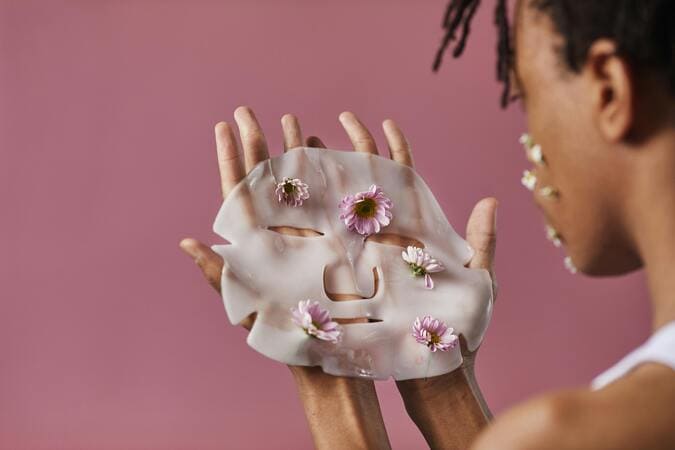
The Alchemy of the Sheet: Navigating the High-Stakes World of Face Masks
There is a particular, quiet ritual to the modern Sunday evening: the peeling back of a foil pouch, the unfolding of a cold, serum-drenched membrane, and the subsequent twenty minutes of forced stillness. In the pursuit of “glass skin” or a “lit-from-within glow,” the face mask has transitioned from a spa-day luxury to a strategic, almost clinical, staple of the household medicine cabinet.
But as the beauty aisles of 2026 groan under the weight of “biocompatible” clays and “bio-fermented” hydrogels, the consumer is left with a daunting question: Is this skin food, or merely expensive wet paper?
To achieve truly beautiful skin, one must look past the packaging and toward the molecular chemistry of the ingredients.
For those whose skin feels like a landscape in a drought, the goal is isosmotic pressure—pulling moisture into the cells and locking the door behind it.


The goal for oily skin is not to strip it bare—a mistake that often triggers a rebound oil production—but to achieve a “gentle eviction” of sebum and debris.
“Dullness” is often just a polite term for a buildup of dead skin cells that have lost their ability to reflect light. To fix this, you need chemexfoliation.
Dermatologists increasingly warn against the “more is more” philosophy. For those with reactive skin or rosacea, the best mask is often the one with the shortest ingredient list. Niacinamide (Vitamin B3) and Centella Asiatica (Cica) remain the darlings of the sensitive-skin world for their ability to soothe inflammation and repair the moisture barrier.
“The mask is a supplement, not a substitute,” says Dr. Elena Rossi, a Manhattan-based dermatologist. “You cannot fix a broken routine with twenty minutes of charcoal once a week. The mask is the exclamation point at the end of a well-written sentence.”
In the end, “beautiful skin” is a moving target. Your skin on a humid July afternoon in the city is not your skin on a frigid January morning in the Catskills. The most effective users of face masks are those who “multi-mask”—applying clay to the T-zone and hydration to the cheeks—treating the face not as a monolith, but as a diverse ecosystem.
As you sit in your living room, draped in a sheet of bio-cellulose, remember that the true luxury isn’t the gold flakes or the snail mucin. It is the twenty minutes of mandated silence you’ve finally given yourself.
In the modern bathroom, the medicine cabinet has evolved from a simple repository for aspirin and toothpaste into a high-stakes laboratory. Among the rows of serums and essences, the face mask remains the quintessential ritual—a gooey, sometimes papery, ten-to-twenty-minute commitment to self-improvement.
But as the “skincare-industrial complex” expands, the question is no longer whether to mask, but which version of ourselves we are trying to reveal. From volcanic ash harvested in Iceland to sheet masks infused with snail mucin, the options are as dizzying as they are damp.
To achieve truly “beautiful” skin, one must move past the marketing and look at the chemistry. Here is how to navigate the pharmacy aisles and high-end boutiques.
If your skin feels tight after washing or looks dull by mid-afternoon, you are likely dealing with a compromised moisture barrier. For you, the goal isn’t to “strip” the skin, but to “flood” it.
For those battling the urban grime of a commute or the hormonal surges of a breakout, the mask serves as a vacuum.
If your concern is “orange peel” texture or hyperpigmentation, you don’t need a scrub; you need an acid. Physical scrubs with walnut shells or beads are increasingly viewed by dermatologists as the “sandpaper” of the skincare world—effective, but often too abrasive.
| Skin Concern | Mask Type | Key Ingredients |
| Dryness | Sheet or Cream | Hyaluronic Acid, Squalane |
| Acne/Oily | Clay or Mud | Sulfur, Charcoal, Zinc |
| Dullness | Enzyme Peel | Pumpkin, Papaya, Glycolic Acid |
| Redness | Gel | Cica (Centella Asiatica), Aloe |


“The best mask is the one you actually enjoy using,” says Dr. Aris Thorne, a fictionalized amalgam of the modern dermatologist’s wisdom. “Skincare is 20% chemistry and 80% consistency. If the smell of a rose-scented mask helps you decompress for fifteen minutes, the cortisol reduction alone might do more for your skin than the ingredients themselves.”
Beautiful skin, it seems, is a marathon, not a sprint. Whether you choose a $2 drugstore sheet mask or a $100 jar of fermented algae, the true secret is patience—and a very good headband to keep the goo out of your hair.