favorite.click
We hope you love our content!
favorite.click
We hope you love our content!
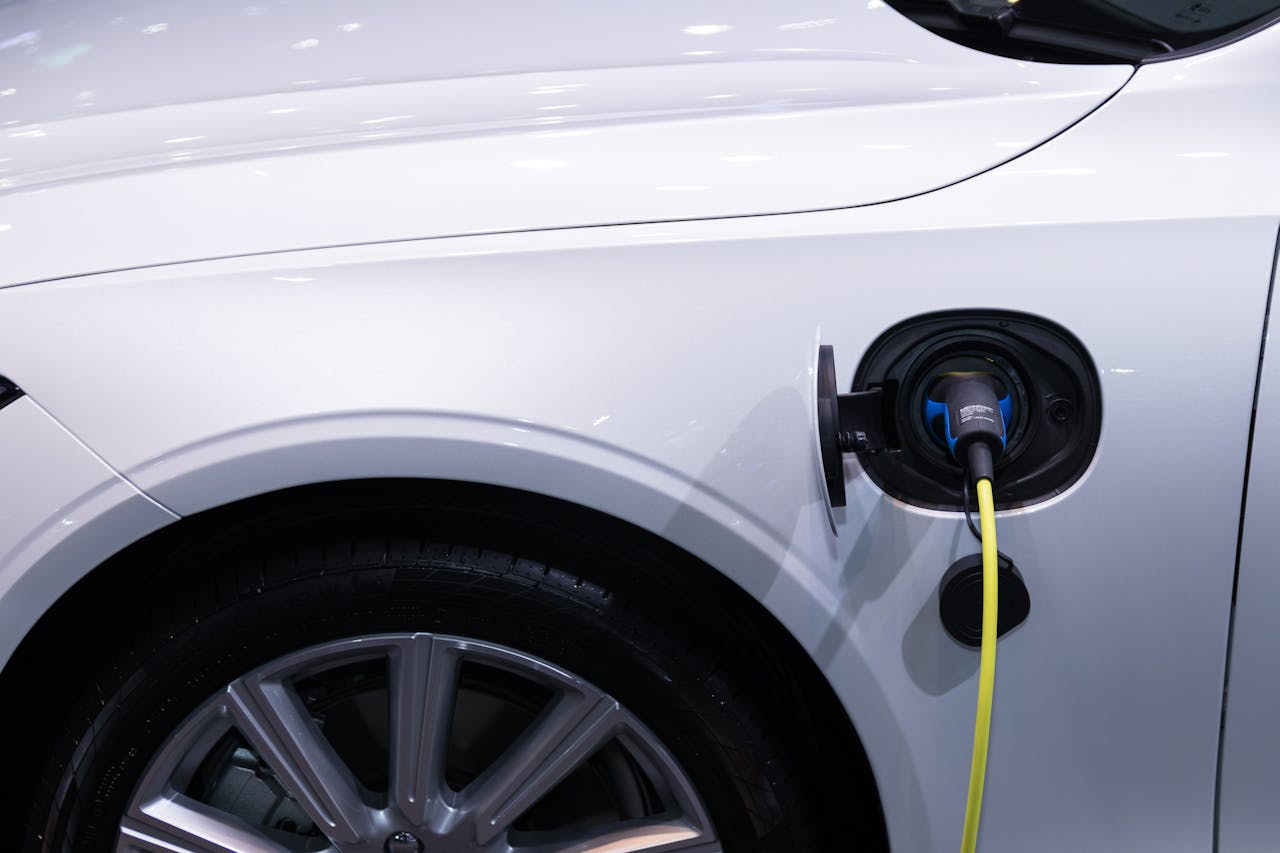
DETROIT — For years, the global automotive industry operated under a singular, multi-billion-dollar assumption: the future was electric, and it was arriving ahead of schedule. Assembly lines were radically retooled, legacy engine programs were quietly shuttered, and Wall Street rewarded any executive who promised a completely battery-powered portfolio.
Today, that certainty has evaporated into a cloud of mounting inventory and eye-watering financial write-downs.
According to data compiled by Cox Automotive, new electric vehicle sales in the United States dropped sharply over the winter, hitting a necessary, if painful, “reset.” EVs accounted for just 5.8% of total new-vehicle sales in the first quarter of 2026—a steep decline from a peak of 10.6% just a year prior.
The immediate culprit is the expiration of federal EV tax credits, which created a frenzy of consumer buying in mid-2025 before abruptly sunsetting. But industry analysts, executives, and dealers say the sudden chilling of the market points to a much deeper, structural friction: the “early adopter” phase of the electric transition is officially over, and the mainstream American car buyer is proving far harder to convert.
For automakers, the financial fallout has been swift and unforgiving.
Earlier this week, Honda stunned investors by reporting its first annual loss in nearly 70 years, a staggering $9.2 billion deficit heavily tied to restructuring its fizzled EV strategies and abandoning aggressive near-term electrification targets. It follows a bruising year for domestic giants; in late 2025, Ford Motor and General Motors recognized a combined $28 billion in EV-related charges and asset write-downs.
U.S. NEW VEHICLE MARKET SHARE (Q1 2026)
1. Traditional Gasoline Vehicles ...... 78.9%
2. Hybrid Electric Vehicles (HEVs) ... 15.3%
3. Battery Electric Vehicles (BEVs) ...  5.8%
“The market was propped up by policy and artificial incentives,” said Stephanie Valdez Streaty, director of industry insights at Cox Automotive. “With federal backing pulled away, the market is adjusting to actual consumer demand. What comes next will be driven entirely by fundamentals: smarter pricing and more affordable products.”
The retreat has fundamentally reshuffled corporate priorities. Stellantis has quietly canceled a highly anticipated electric Ram pickup and delayed its Jeep Recon lineup. Meanwhile, companies that hedged their bets are reaping the rewards. Toyota, once criticized by environmentalists for its sluggish embrace of all-electric technology, has seen its profits swell, driven by a record 15.3% surge in hybrid vehicle registrations this past March.
Outside the boardroom, the reality of the EV slump is playing out across sprawling dealership lots.
A critical factor dampening new EV sales is a massive influx of off-lease electric cars entering the used market. Two and three years ago, dealers aggressively pushed EV leases. Now, those cars are returning in droves.
Because initial residual values were calculated using overly optimistic projections, these vehicles are experiencing staggering real-world depreciation. A consumer looking at a new $45,000 electric crossover faces a jarring calculation when a nearly identical used model with fewer than 10,000 miles is sitting on the same lot for half the price.
TOP 5 U.S. ELECTRIC VEHICLE SALES SHARE (Q1 2026)
1. Tesla Model Y ...................... 34.2%
2. Tesla Model 3 ...................... 20.2%
3. Chevrolet Equinox EV ...............  1.8%
4. Ford Mustang Mach-E ................  1.4%
5. Honda Prologue .....................  0.9%
Furthermore, the everyday economics of owning an electric vehicle have shifted. While public charging infrastructure has expanded significantly—reaching more than 230,000 public chargers nationwide by the start of this year—the financial incentive to switch has narrowed.
“An EV generally needs domestic gasoline prices to sit around high $3 a gallon to comfortably beat an equivalent hybrid in pure cost savings,” said Ivan Drury, an analyst for Edmunds. “Even with recent energy market fluctuations, the premium on a new electric car doesn’t make sense to a family operating on a tight monthly budget, especially when hybrids offer 45 miles per gallon without the range anxiety.”
The slowdown has also underscored an uncomfortable reality for Detroit and Tokyo: the American EV market remains, effectively, a monarchy.
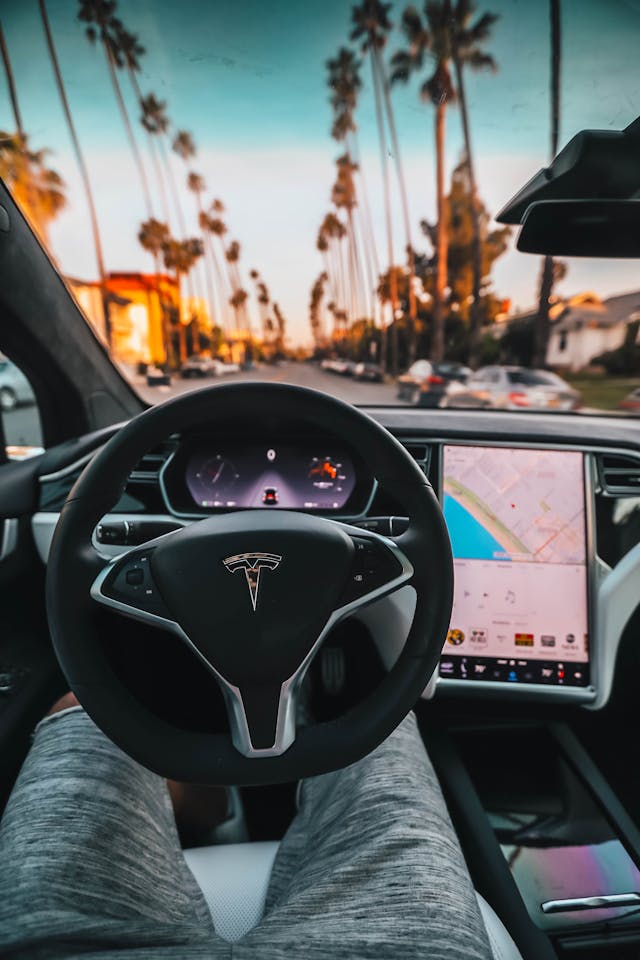
Even as total EV volume contracted, Tesla managed to claw back market share. One out of every three electric vehicles sold in the United States this year was a single model: the Tesla Model Y. Combined with the refreshed Model 3, Elon Musk’s company commands nearly 55% of the entire domestic electric sector.
For competitors like Chevrolet, Ford, and Hyundai, competing for the remaining sliver of the pie has proven to be an unprofitable volume game. Most automakers are selling their electric vehicles at a rate of fewer than 2,000 units a month. In an industry dictated by the massive economies of scale, low volume is a financial death sentence.
The long-term trajectory toward electrification has not been abandoned; global sales in less policy-volatile markets like China and Europe continue to grow, albeit at a gentler pace. But in the United States, the road to an emissions-free future has hit a formidable detour. Automakers are learning that rewriting a century of automotive culture requires more than a quiet engine and a large touchscreen—it requires a consumer willing to pay for it.
For a broader perspective on the global automotive landscape, the video EV Sales Aren’t Collapsing: 2025 Wrapped & Our 2026 Predictions! offers an insightful counterpoint on how electric vehicle adoption continues to grow internationally despite the distinct headwinds facing the United States market.